| - MRR TUTORIALS - TRACKWORK - PASSENGER STATIONS |
Passenger Train Stations on the Model Railroad
The centerpiece of the Model Railway
Passenger stations are often the visual and operational centerpieces of a model railroad. They create activity, movement and realism while also defining the character of the railway and the surrounding town or city. A well-designed station not only looks impressive but also creates interesting traffic patterns and realistic train operations. Understanding how real passenger stations function can therefore greatly improve both the appearance and operation of a model railroad.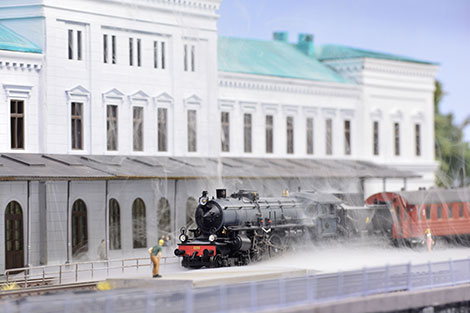
The Swedish State railway steam locomotive F1200 stops in Gothenburg
Terminal Stations
Passenger stations are generally divided into two main categories: terminal stations and through-stations. A terminal station, sometimes called a stub-end station, is where trains arrive and terminate. The tracks end at the platforms and the train must reverse direction before departing again. Large cities often used terminal stations because they allowed passengers to arrive directly in the city center. Famous examples include stations in Paris, London and Stockholm. On a model railroad, terminal stations create interesting operations because locomotives often need to be uncoupled and moved to another end of the train before departure. Additional switching movements may also be required for sleeping cars, mail wagons or dining cars.
 Terminal station with four station tracks and three platforms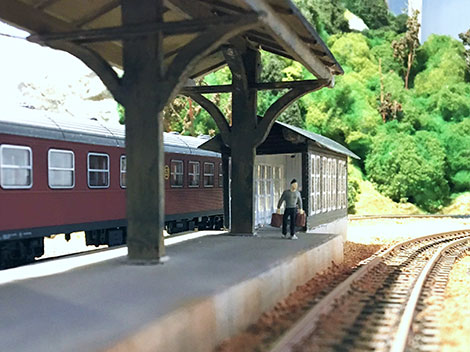
Through Stations
A through-station allows trains to continue straight through the station without reversing direction. These stations are operationally simpler and require less space, which makes them very suitable for many model railroads. Through-stations are commonly found in smaller towns and along main lines where trains continue toward other destinations.
In some circumstances the station is small and do not have the signals or turnouts which makes a station. It´s then a just a stop, not a station.
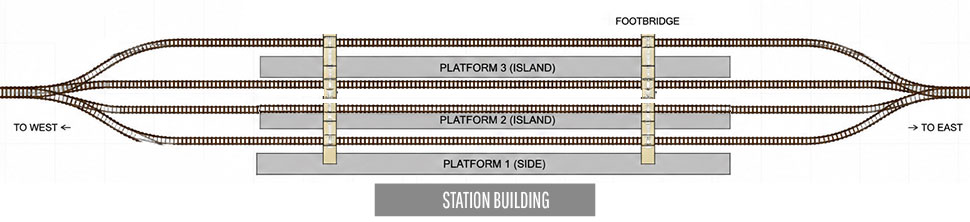 Through-Station with four station tracks and three platforms
 Waiting Tracks and Locomotive Maintenace
Steam and diesel eras often required waiting tracks or locomotive escape tracks near the station. When a locomotive arrived at a terminal station, it usually had to uncouple from the train and move to a waiting track while another locomotive prepared for the return service. These tracks were normally placed close to the station throat, where switches allowed locomotives to move between tracks without blocking passenger traffic.Steam locomotives additionally required servicing after arrival. Water cranes, sometimes called water horses, were commonly placed near the waiting tracks or close to the station exits. These allowed steam locomotives to refill water quickly before continuing their journey. Coal stages, ash pits and small engine sheds were often located nearby as well. On a model railroad, even a simple water crane beside a siding can instantly create a stronger steam-era atmosphere.
In large stations, separate locomotive depots were often located just outside the passenger area to avoid congestion. Electric locomotives usually required less servicing and therefore reduced the need for extensive locomotive facilities in later eras.
Platform Lengths and Heights
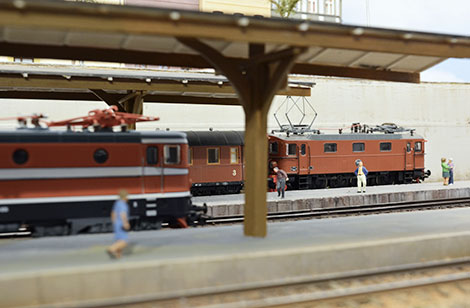
Platform dimensions varied greatly depending on country, era and type of traffic. Older stations from the steam era often had relatively short and low platforms because trains were shorter and passenger volumes smaller. Passengers frequently stepped directly from the carriage onto the platform with a significant height difference. In rural stations, platforms were sometimes little more than gravel or packed dirt.Passenger Access to Platforms
Passenger access arrangements are another important detail that adds realism to a station scene. Small rural stations often allowed passengers to cross the tracks directly at ground level. Wooden walkways between platforms were common and inexpensive to build. While practical, this arrangement became increasingly dangerous as train speeds and traffic volumes increased.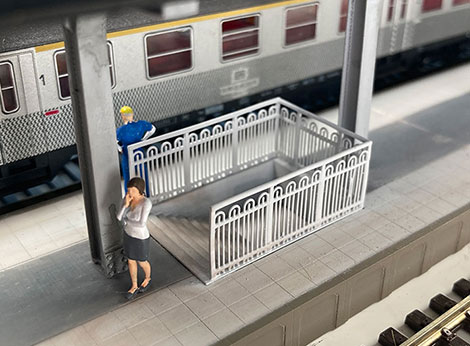
3D-printed underpass with wrought iron fence
Overpasses or footbridges is another common solution. These bridges became iconic features of many railway stations and can create attractive visual elements on a model railroad. Modern stations often combine elevators, escalators and covered walkways to improve passenger flow and accessibility
Passenger Transfers and Traffic Flow
Passenger stations were also important transfer points between different types of train services. In smaller towns, a local branch line train might connect with a larger regional or long-distance express service. Timetables were often coordinated so passengers could transfer conveniently between trains. Large city stations handled far more complex traffic patterns, with suburban commuter trains, regional trains and international long-distance services operating simultaneously. This creates excellent operational opportunities for a model railroad. Local trains may arrive shortly before an express train departs, while passengers hurry between platforms. Mail trains, sleeping cars or dining cars can be switched in and out to simulate realistic railway activity.Station Size and Surroundings
The size and complexity of a passenger station depended heavily on the surrounding community.
A countryside station might consist of a single platform, a small wooden station building and perhaps one passing siding. Traffic was usually light and trains stopped only briefly.
Small city stations typically included multiple platforms, freight sidings and a modest engine facility. These stations handled both passenger and local freight traffic and often became the center of the surrounding town.
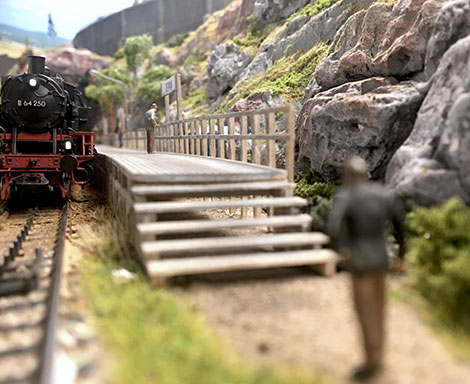
Rural stop featuring one track and a simple wooden platform
For model railroaders, the most successful station designs are usually those that match the available space and the overall story of the layout. Even a small rural halt can feel highly realistic when combined with believable operations, passengers and surrounding scenery.