| - START - CONTROL - INTRODUCTION | SITEMAP |
Controlling the Model Railway
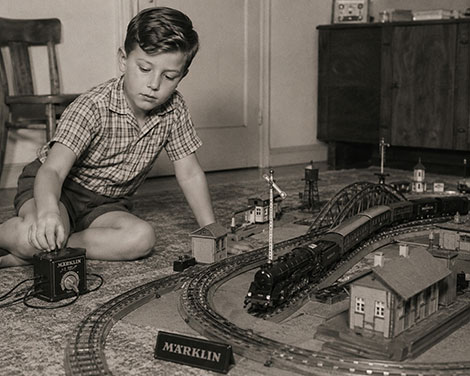
The European manufacturer Märklin also developed its own variation of the DCC standard, which they call mfx. With mfx, all locomotives, signals and accessories automatically assign themselves an address. They also automatically transmit information to the control unit about which functions they can perform, and these are displayed logically in the controller as different function symbols. The mfx standard has since been further developed into what is now known as mfx+. With mfx+, locomotives can be operated from the control unit in the same way as the controls of the real locomotive, while fuel and sand supplies must continuously be replenished just like in real railway operation.
In addition to the DCC or mfx control unit, it is also possible to add train control software. Such software can organize and coordinate traffic on the model railroad so that turnouts, signals, level crossings and building lights follow realistic day-and-night and traffic cycles. One example of such software is RocRail. With RocRail, trains can also be operated using a smartphone or other wireless throttles and control devices.